Information Management for Organizational Effectiveness
Friday, 10 Oct 2025 | Organizational decision making
Today's class will be led by your colleagues in the CLLKFRcollective. They will be doing the presenting, but you all will aid them by contributing to the discussion of the topics, as appropriate.
Organizational culture; pros and cons
Organizational culture played key roles in two events of the 20th century.
21 years after 1941, this happened.
1962
"... we are assuming governmental behavior can be most satisfactorily understood by analogy with the purposive acts of individuals ... it obscures the persistently neglected factor of bureaucracy; the 'maker' of government policy is not one calculating decisionmaker but is rather a conglomerate of large organizations and political actors ..."
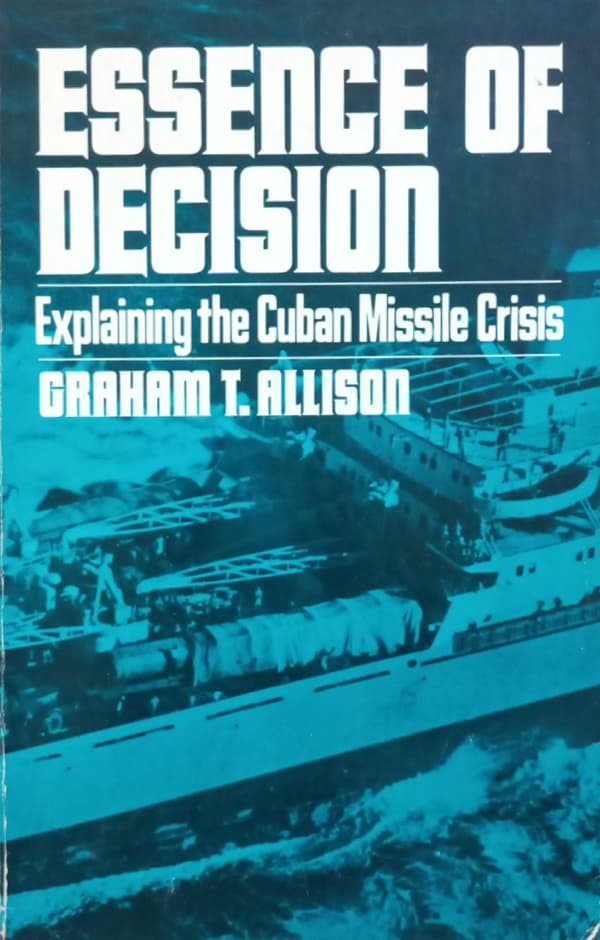
the second of two classic studies of the role of organizational culture in decision making
Leaders in Crisis: President John F. Kennedy - Cuban Missile Crisis, 1962Read part of Graham Allison's take on 1962
Allison, G. T. (1971).
Essence of decision: Explaining the Cuban missile crisis.
Boston: Little, Brown
read pages v-viii;
skim pages 10-38, 87-100, 144-184;
read pages 245-263; and
skim pages 264-277
For explaining and predicting the behavior of individual men, this general orientation toward purpose and rational choice seems to be the best available. The rationality of man's choices is, of course, "bounded" by things such as the availability of information and the difficulty of calculation. But as a baseline, if one knows how an individual has defined his problem and what resources he has available, his objectives provide a good clue to his behavior.
Difficulties arise when the thing to be explained is not the behavior of an individual but rather the behavior of a large organization or even a government.
compare how the decisions in this situation were affected by organizational culture
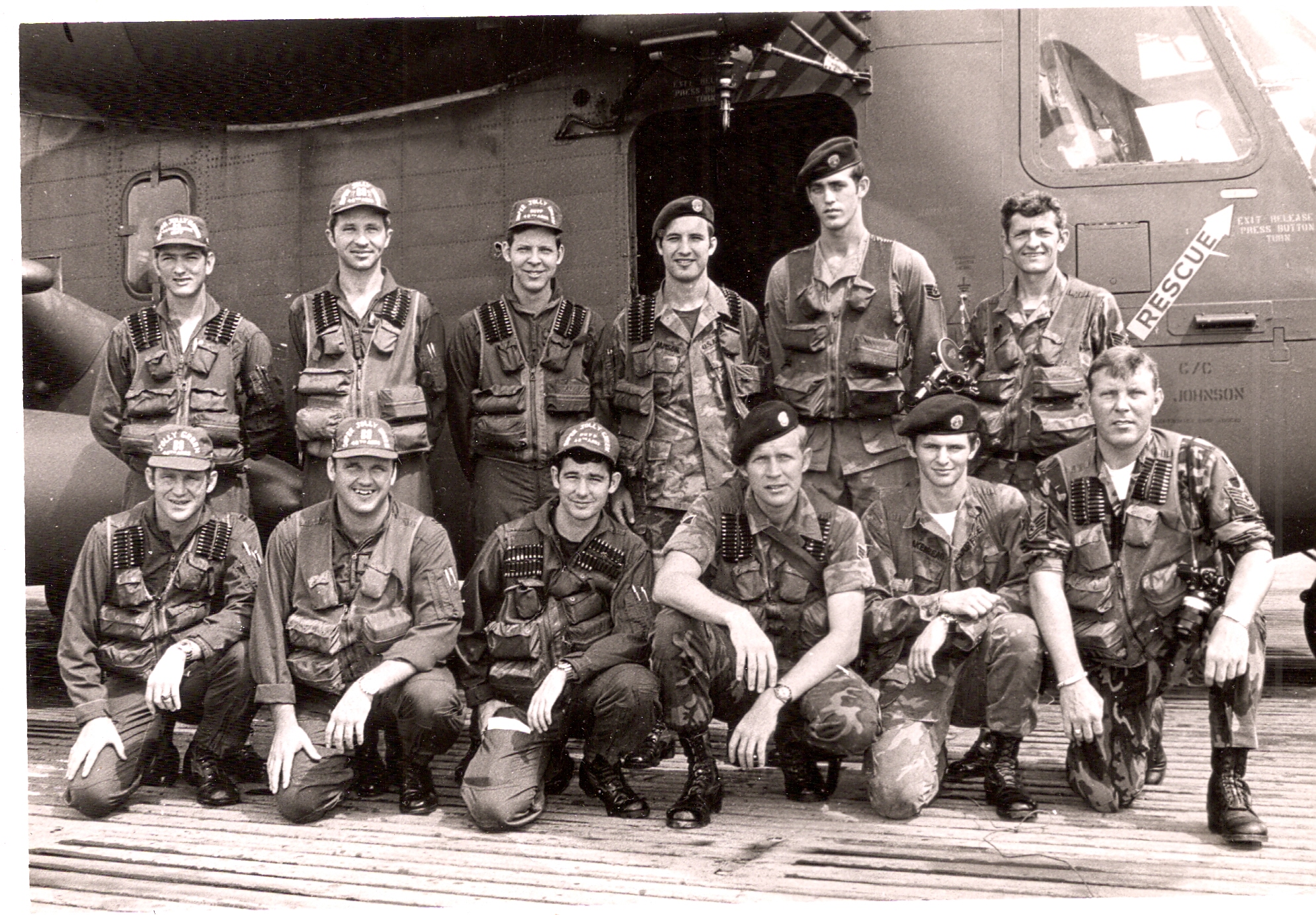
The two HH-53C crews who participated in the Oyster 01B rescue mission after the flight.
You read Saving 'Boxer 22'. Here compare the story there to The Rescue of Roger Locher.
Is there anything to learn about how organizational memories are born and transmitted? Do you think the first story affected the second?