Home Schedule Canvas Syllabus Contact Options Last Updated on

Information Management for Organizational Effectiveness

Wednesday, 08 Oct 2025 | Organizational decision making

logo of the she.suite

Today's class will be led by your colleagues in the she.suite. They will be doing the presenting, but you all will aid them by contributing to the discussion of the topics, as appropriate.

Organizational culture; pros and cons

Organizational culture played key roles in two events of the 20th century,
separated by 21 years.
We'll consider them chronologically.

1941

"... the mechanism by which intelligence "signals" are sorted from background "noise" are neither uniform, entirely rational or random, but are instead functions of the culture and identity of the analytic unit"
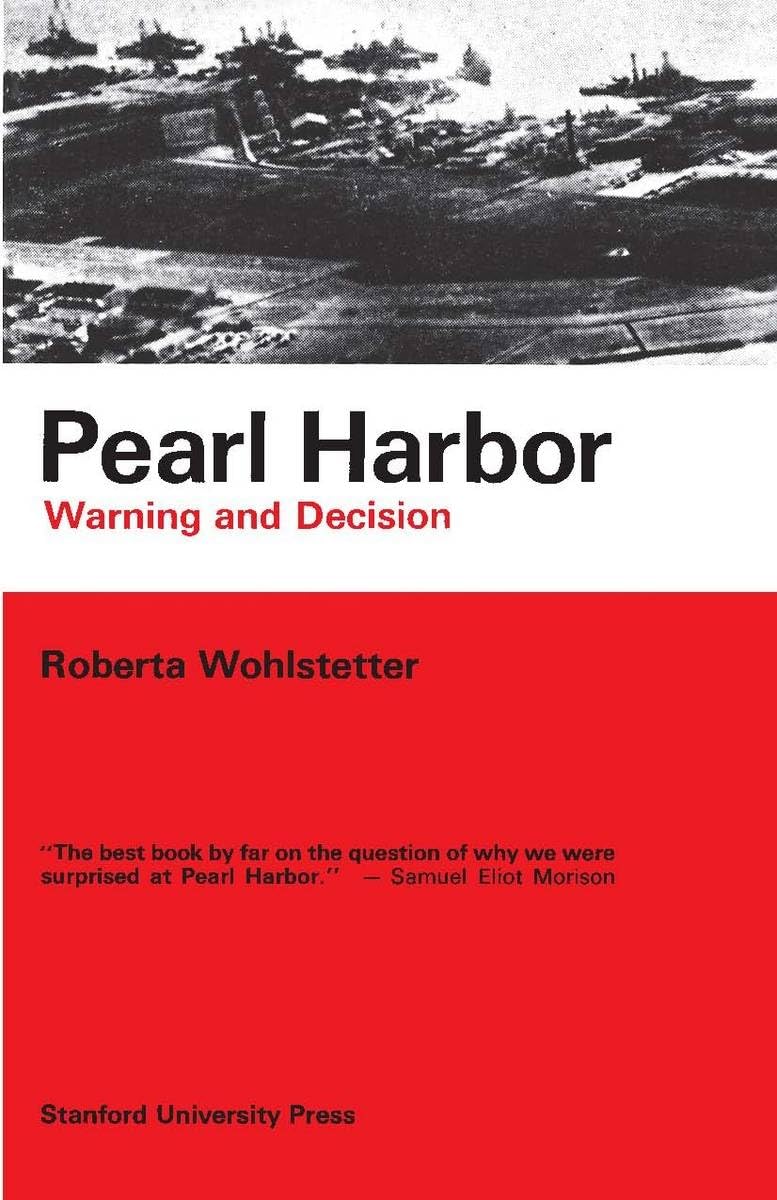
Roberta Wohlstetter's Pearl Harbor: Warning and Decision

One of two classic studies of the role of organizational culture in decision making

Read part of Roberta Wohlstetter's take on 1941

Wohlstetter, R. (1962). Pearl Harbor; warning and decision. Stanford, Calif: Stanford University Press
read pages vii-ix and 382-401

First of all, it is much easier after the event to sort the relevant from the irrelevant signals. After the event, of course, signal is always crystal clear; we can now see what disaster it was signalling, since the disaster has occurred. But before the event it is obscure and pregnant with conflicting meanings.

consider the decisions made under conditions of uncertainty in this situation

Ban Phanop valley as it looks today

Read Saving 'Boxer 22'

Is there anything to learn about how organizational memories are born and transmitted?

Things we may talk about

  • using Wohlstetter as an examples, we'll reflect on the benefits and disadvantages of organizational culture
  • why is an organizational culture necessary?
  • does it help organizations orient their goals and prioritize?
  • does it make organizations vulnerable to stagnation?
  • think of companies and organizations that refused to change their organizational culture and suffered as a result

Something else

Ndakuvara

Oliver "Tuku" Mtukudzi (born 22 September 1952 in Highfield, Harare; died 23 January 2019) is an award-winning Zimbabwean musician, composer and guitarist. He is widely regarded as the most celebrated performer in the country's history. From the Wikipedia entry ...

With his husky voice, Mtukudzi became the most recognised voice to emerge from Zimbabwe and onto the international scene and he earned a devoted following across Africa and beyond. A member of Zimbabwe's KoreKore group, with Nzou Samanyanga as his totem, he sang in the nation's dominant Shona language along with Ndebele and English. He also incorporated elements of different musical traditions, giving his music a distinctive style, known to fans as Tuku Music ...
Prior to the independence of Zimbabwe, Mtukudzi's music depicted the struggles under Rhodesian white minority rule. In subsequent years following Zimbabwean independence, his music has advocated for tolerance and peace and has frequently portrayed the struggles of women and children.
back to top