Information Management for Organizational Effectiveness
Friday, 03 Oct 2025 | Organizational memory
Using Schein's three levels of organizational culture ...

... we'll consider how basic underlying assumptions, espoused values, and artifacts all interact with each other
Memory constructs narratives from experiences, influencing decision-making and perception.
This discussion is about remembering happiness, but watch it thinking about remembering things that worked, rather than things that didn't.
But what about the memory of the field you are studying?
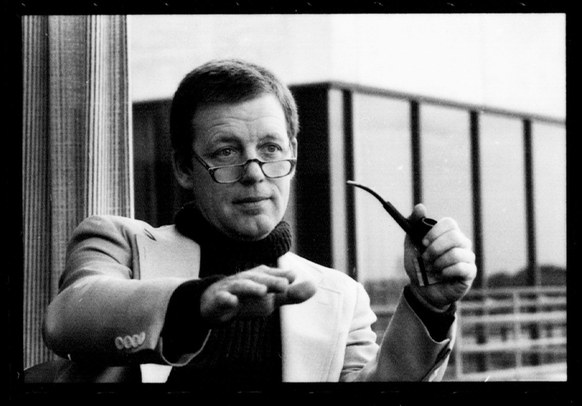
Taylor built one of the greatest teams in the history of high-technology and kept it together for years. Heroic lone-wolf entrepreneurs may be the preferred heroes of narratives spun by the media, but history has shown us that teams—and the networks that come from them—are the true engines behind innovation in Silicon Valley and far beyond. No one understood this better than Bob Taylor.
You've never heard of tech legend Bob Taylor, but he invented 'almost everything' by Leslie Berlin in Wired, 21 April 2017
You don't have to read these unless you wish to ...
... but we might touch upon them in conversation

Organizations come into existence for the pursuit of specific purposes. Purpose demands coordination, planning, and supervision. It requires the systematic introduction of rationality criteria, of cause and effect, cost and benefit. The pursuit of purpose encourages behavior and structure aimed at reducing uncertainty. All of this gives rise to that characteristic organizational form, bureaucracy. The specificity of functions in a bureaucracy mirrors the specificity of its purposes.
-
Posen, B. (1984).
The sources of military doctrine: France, Britain, and Germany between the world wars.
Ithaca: Cornell University Press.
pages 43-46
... inculcating a culture of historical-mindedness when dealing with present problems is a very important concept in leader development. Historical-mindedness helps to refine a logical thought structure for purposeful decisionmaking.
- The Role of Military History in the Education of Future Officers by Michael Evans, 1997.
Something else
Robert Hood & Femi Kuti jouent James Brown

In France TV's Variations showcases, duos create electronic-acoustic collaborations that are like dives into the unknown. In its fourth season in 2019, Variations presented an unprecedented encounter of Detroit techno innovator Robert Hood with Afrobeat saxophonist Femi Kuti to bring to new life to the little-known music of the Godfather of Soul, James Brown. The jazz side of JB from the horn of Pee Wee Ellis was the focus. The electronic producer largely lays the foundation for the set with his minimalist beats and experimental colors which free Kuti to deliver his explosive improvisations. Kuti says that Robert “built the house and I did the decoration.” There are stretches of call-and-response grooves as well as chants of “stomp your feet” and sample-like JB singular shouts. Femi's father was the master Fela Kuti who controversially jazzified the Ghana-born highlife music in his native Nigeria and became known as the African James Brown. He was the chief purveyor of Afrobeat. A virtuoso on his instrument, Femi takes the source and charges ahead with an edgy brew of pop, soul, avant-jazz. No lyricism, just grit and determination. While the pair had never worked together, based on a telephone conversation prior to this show, they agreed that they linked spiritually.
Dan Ouellette