|
1
|
|
|
2
|
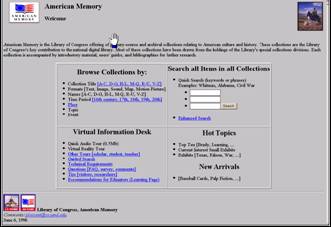
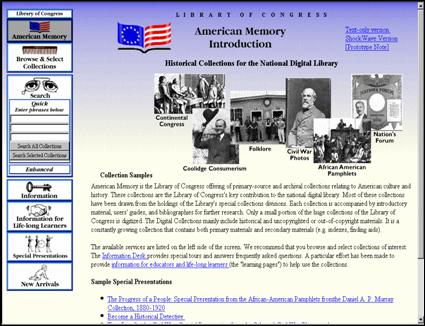
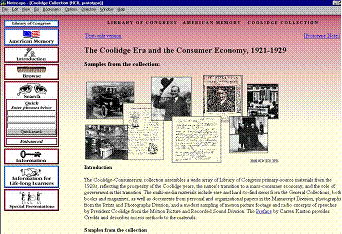
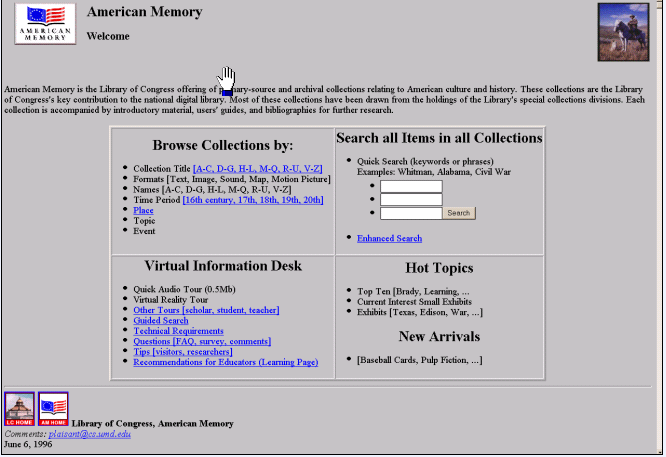
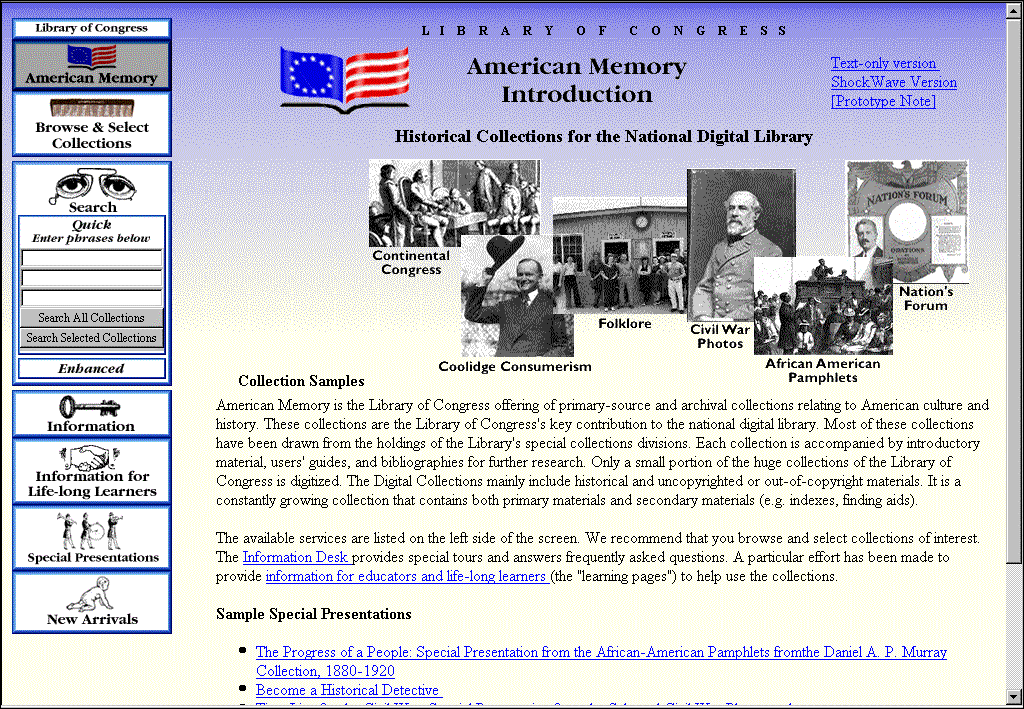
- 1995 LoC initiated the NDL
- 1995 2 year contract with UMD to collaborate on interface development
- University team to drive near-term design through prototypes, LoC team
to implement within current constraints.
|
|
3
|
- 1. Design team: analysts, programmers, librarians, and interface
designers.
- 2. Strong perspective based on short courses
- occasional users, touch screen, discrete and continuous buttons
- 3. Regular meetings with brainstorming encouraged
- 4. Prototype subtasks assigned
- 5. Preliminary designs critiqued
- 6. Revision and continued critique
- 7. User testing
- 8. Revision
- 9. Continued extension
|
|
4
|
- 1. Needs Assessment
- Current Users (RR librarians, patrons, online)
- Potential Users (scholars, teachers/SLMS, public)
- 2. Structure Analysis
- Current Content & Organization (e.g., collection/item record)
- Future Content & Organization
- 3. Develop feature space (collect, analyze exemplars)
- 4. Agree on first principles, metaphor, outline guidelines
- 5. Sketch designs, group critique
- 6. Prototypes, “discount” user tests (3 iterations planned)
- 7. Final prototype(s) and extended user tests
- 8. Reflection and evaluation of process, final guidelines
|
|
5
|
- 9 Reading Rooms
- 3 part structured interview (in teams)
- Content, users, strategies
- Yielded lists of special interface challenges
- Day care center questionnaire
- Key issues
- Novelty (DLs were new)
- Diversity in experience (domain, technology)
- Diversity in platforms
- Volume, diversity, formats, granularities of materials (digital+analog,
finding aids+collections+primary, lack of common metadata)
|
|
6
|
- Minimize disorientation by reducing navigation (e.g., minimize scrolling
and jumping, flattening hierarchy) and anchoring users in a consistent
context;
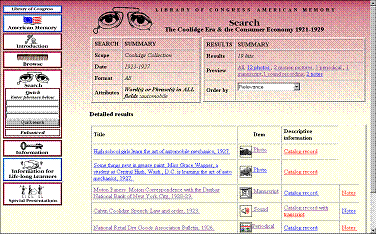
- Provide primary information at the earliest point in the interaction as
possible;
- Support rapid relevance decisions through overviews and previews.
|
|
7
|
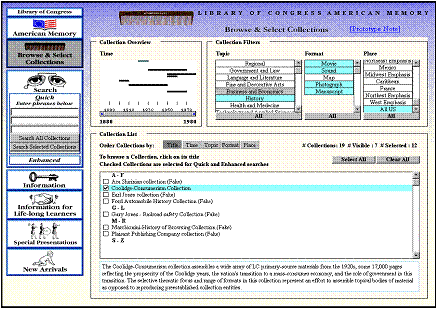
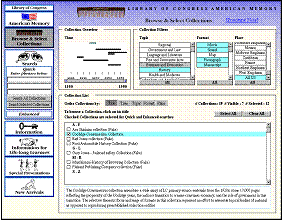
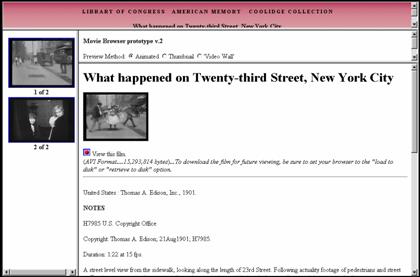
- Use dynamic query interactions
- To cope with limitations of HTML display and cgi interaction, use Java
and JavaScript
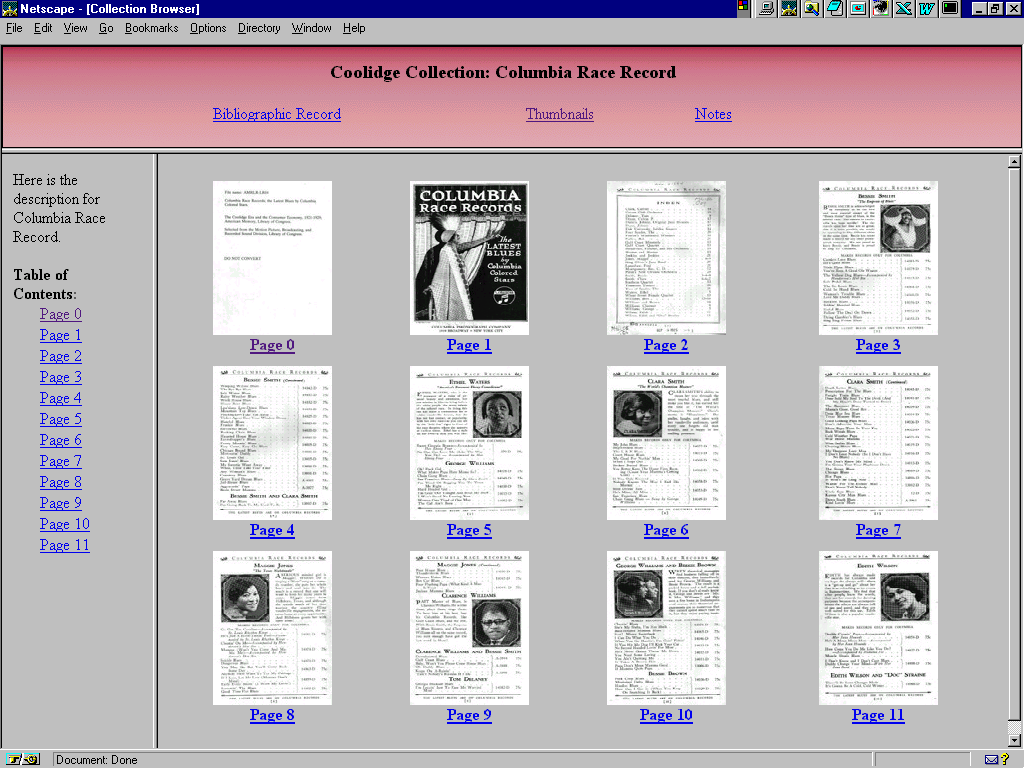
- To cope with metadata issues, divide into across collection browser and
within collection browser (overview and preview distinctions)
|
|
8
|
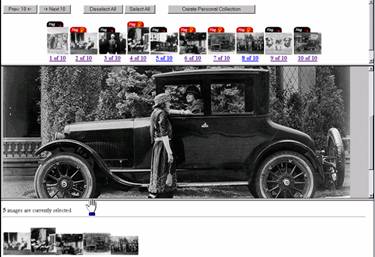
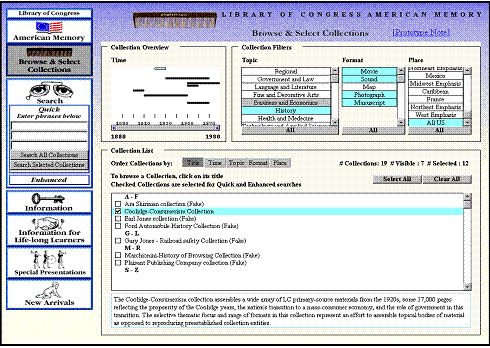
- Aim for user-manipulable VIEWS rather than alchemy
- Overviews are constructed from, and represent COLLECTIONS
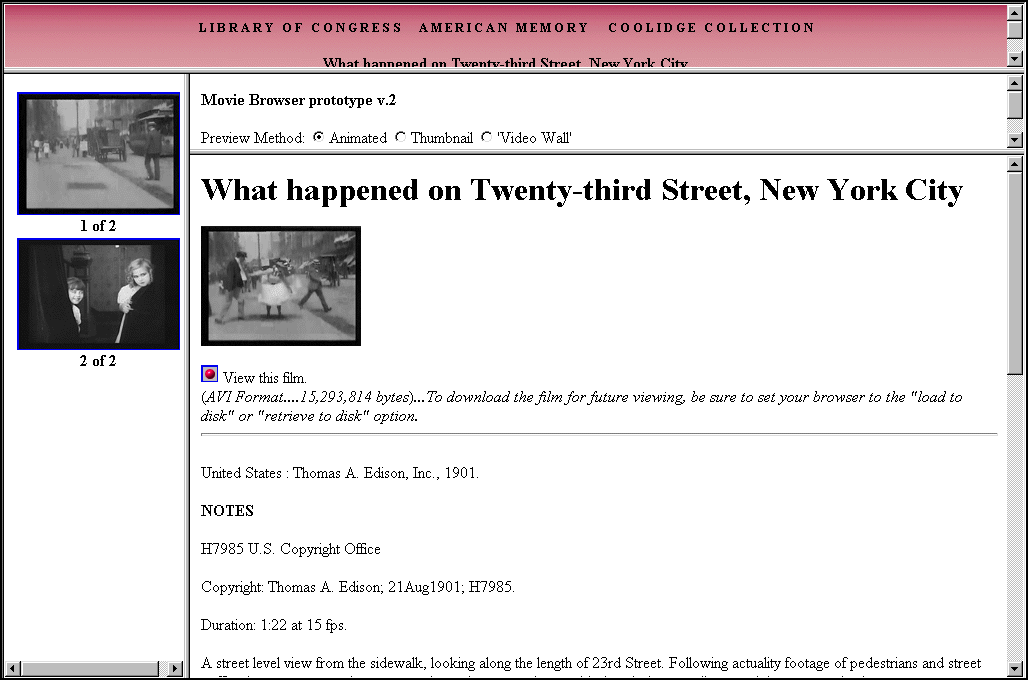
- Previews are extracted from and are surrogates for OBJECTS
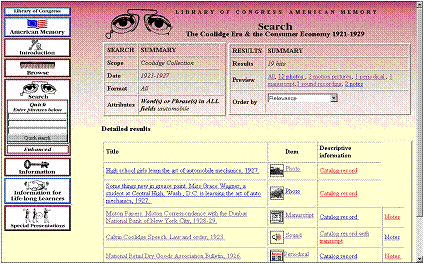
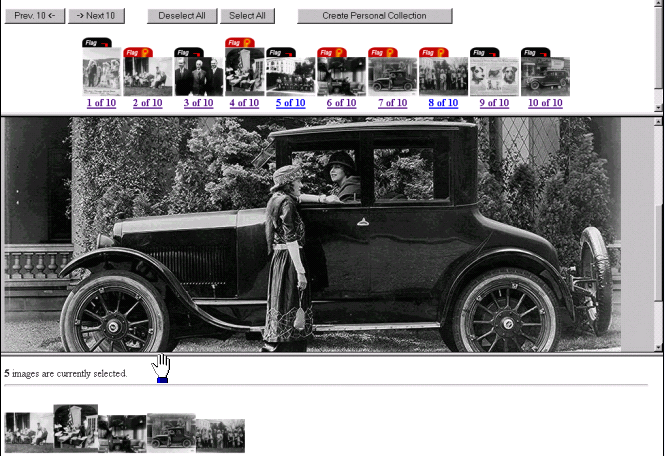
- Dynamic query approach with starfield and barfield displays
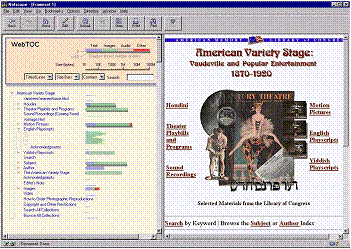
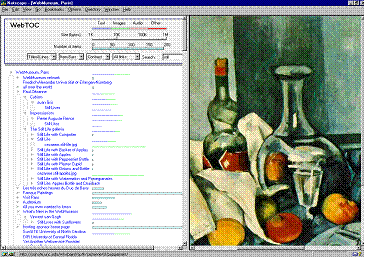
- Visualization widgets are embedded in larger user tasks
|
|
9
|
|
|
10
|
|
|
11
|
|
|
12
|
|
|
13
|
|
|
14
|
|
|
15
|
|
|
16
|
|
|
17
|
|
|
18
|
|
|
19
|
|
|
20
|
|
|
21
|
- http://www.cs.umd.edu/hcil/ndl/
- Marchionini, G., Plaisant, C., Komlodi, A. (May 1996) User needs
assessment for the Library of Congress National Digital Library,
CS-TR-3640, CAR-TR-829, CLIS-96-01.
- Marchionini, G., Plaisant, C., & Komlodi, A. (1998). Interfaces and tools for the Library
of Congress National Digital Library Program. Information Processing &
Management, 34(5), 535-555.
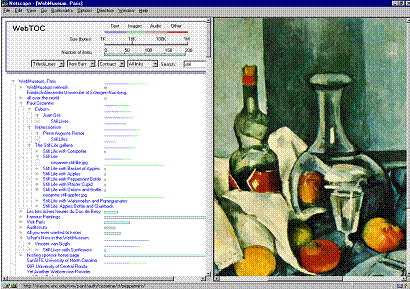
- Nation, D. Plaisant, C., Marchionini, G., & Komlodi, A. (1997). Visualizing
websites using a hierarchical table of contents browser: WebTOC. In Proceedings of Designing for the
Web: Practices and Reflections (3rd Conference on Human factors and the
Web, Denver, June 12, 1997).
- Plaisant, C., Marchionini, G., Bruns, T., Komlodi, A., & Campbell,
L. (1997). Bringing treasures to the surface: Iterative design for the
Library of Congress National Digital Library Program. ACM CHI ‘97 Conference. (Atlanta,
March 22-27, 1997), p. 518-525.
- Marchionini, G., Plaisant, C., & Komlodi, A. (forthcoming). The people in digital libraries:
Multifaceted approaches to assessing needs and impact. In A. Bishop, B. Buttenfield, & N.
VanHouse (Eds.) Digital library use: Social practice in design and
evaluation. Cambridge, MA: MIT
Press.
|

 Notes
Notes