Information Management for Organizational Effectiveness
Wednesday, 17 Sep 2025 | Ethics & Individuals
How do we, as individuals, make ethical decisions ...
... when we are members of an organization?
Think about yourselves as you listen to this

Our buggy moral code | Dan Ariely
Then read ...
A Dishonest Study on Dishonesty Puts a Prominent Researcher on the Hot Seat
How do you feel now?
Are individual ethics a thing apart ...
or something that varies according to the situation?
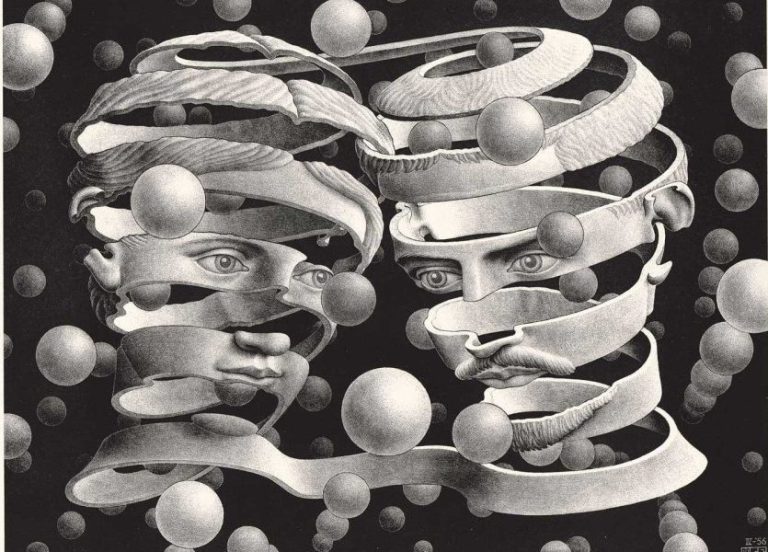
Some of history's greatest philosophers, then, agree that wrongdoing tends to be motivated by self-interest. ... Although most assume that an immoral person is one who's ready to defy law and convention to get what they want, I think the inverse is often true. Immorality is frequently motivated by a readiness to conform to law and convention in opposition to our own values. In these cases, it's not that we care too little about others; it's that we care too much. More specifically, we care too much about how we stack up in the eyes of others.
- The desire to fit in is the root of almost all wrongdoing by Christopher Freiman in Aeon Magazine, 23 Feb 2017
Dr Mol and his colleagues have sent their concerns about more than 750 papers to the journals that published them. But, all too often, either nothing seems to happen or investigations take years. Only 80 of the studies they have flagged have so far been retracted. Worse, many have been included in systematic reviews—the sort of research round-ups that inform clinical practice.
- Science & technology | Scientific malpractice: There is a worrying amount of fraud in medical research, The Economist, 22 February 2023 and ask yourself if the structure of the science/educational community makes this situation more likely .
Goldenberg reviewed existing social-science research on vaccine hesitancy and came to the conclusion that the central argument is really a philosophic one. The public might not know much science, and might be bad at estimating relative risks, Goldenberg writes, but those facts don't explain vaccine hesitancy. Her research found that many parents' concerns about vaccines are similar ... they can't quite mesh the goals of widespread, population-scale public health with their personal goals for their individual children.
- Parents who reject vaccination are making a rational choice - they prefer to put their children above the public good by Maggie Koerth-Baker in Aeon Magazine, 16 February 2016 and think about the issues in the article in terms of individual ethical values in relation to the ethical values of the individual's organization
You don't have to read these unless you wish to ...
... but we might touch upon them in conversation

Ellsberg said that every government wants to conceal its mistakes, its lies, and its abuses of power from the public. “Here's what I learned long before age ninety: that many virtues—like loyalty, obedience to authority, and courage—can be put toward dangerous and bad causes," he said. “Officials are reluctant to recognize that loyalty to the President can, and regularly does, conflict with the higher loyalty they owe to the Constitution.”
- The Deceit and Conflict Behind the Leak of the Pentagon Papers by Ben Bradlee, Jr. in The New Yorker, 08 April 2021
Boxill had more power than Gore, but she was found to have committed the same sin: doing her job. She was called on to keep athletes eligible under a system whose very nature undermined academic standards — standards that, as a faculty member, she was charged with upholding. Pulled in two different directions, she got burned by a voluminous paper trail. The university moved on, casting her aside after nearly 30 years of service, and left its adherence to the “amateur” myth in place .
- Read the The Confounding Case of Jan Boxill | Andy Thomason, Chronicle of Higher Education, 07 September 2021 and ask yourself what you might have done were you in the same situation