
As you begin to design your website think about designing it in terms of the user(s) of the site
Take a few minutes and decide on a "theme" for the page(s) you are creating.
Decide the structure of the site and what images you will need.
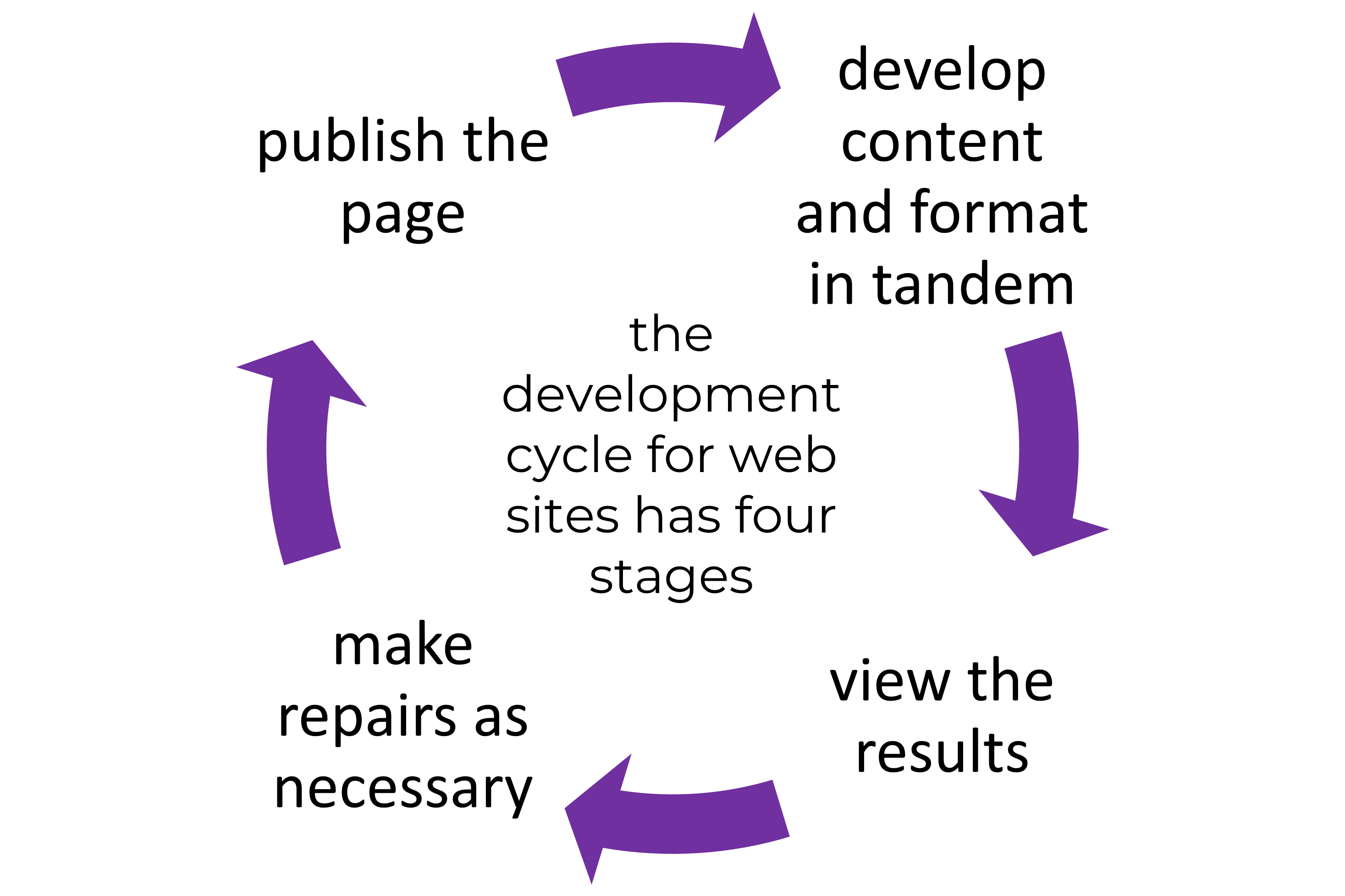
You want to consider that the development cycle for web sites has four stages:
Jakob Nielsen suggests that we have an absolute need for design standards.
Standards ensure that users
You cannot go wrong by following the direction given in the Web Style Guide. But we will review some basic considerations and offer a way to approach the process of designing your web site. The principles are pretty straightforward:
know the rules before you knowingly break them
Think about the audience
tailor your look and your content to appeal to this audience
consider their needs and their limitations
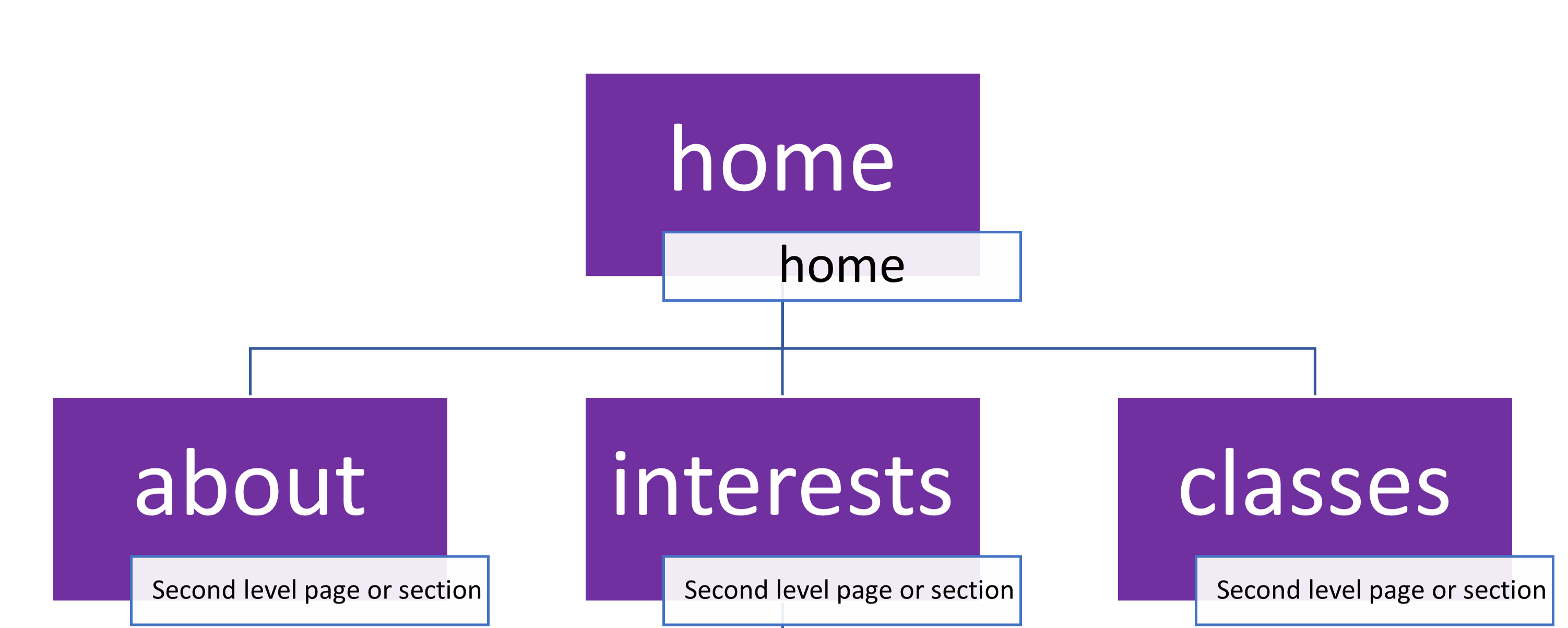
What is the top level page?
This is home page, the page that will open when a user types in the URL of your web site's directory

Are there any second level pages?
If so, they are children of the home page
Are there any third level pages?
If so, each third level page is a child of the second level page it is subordinate to
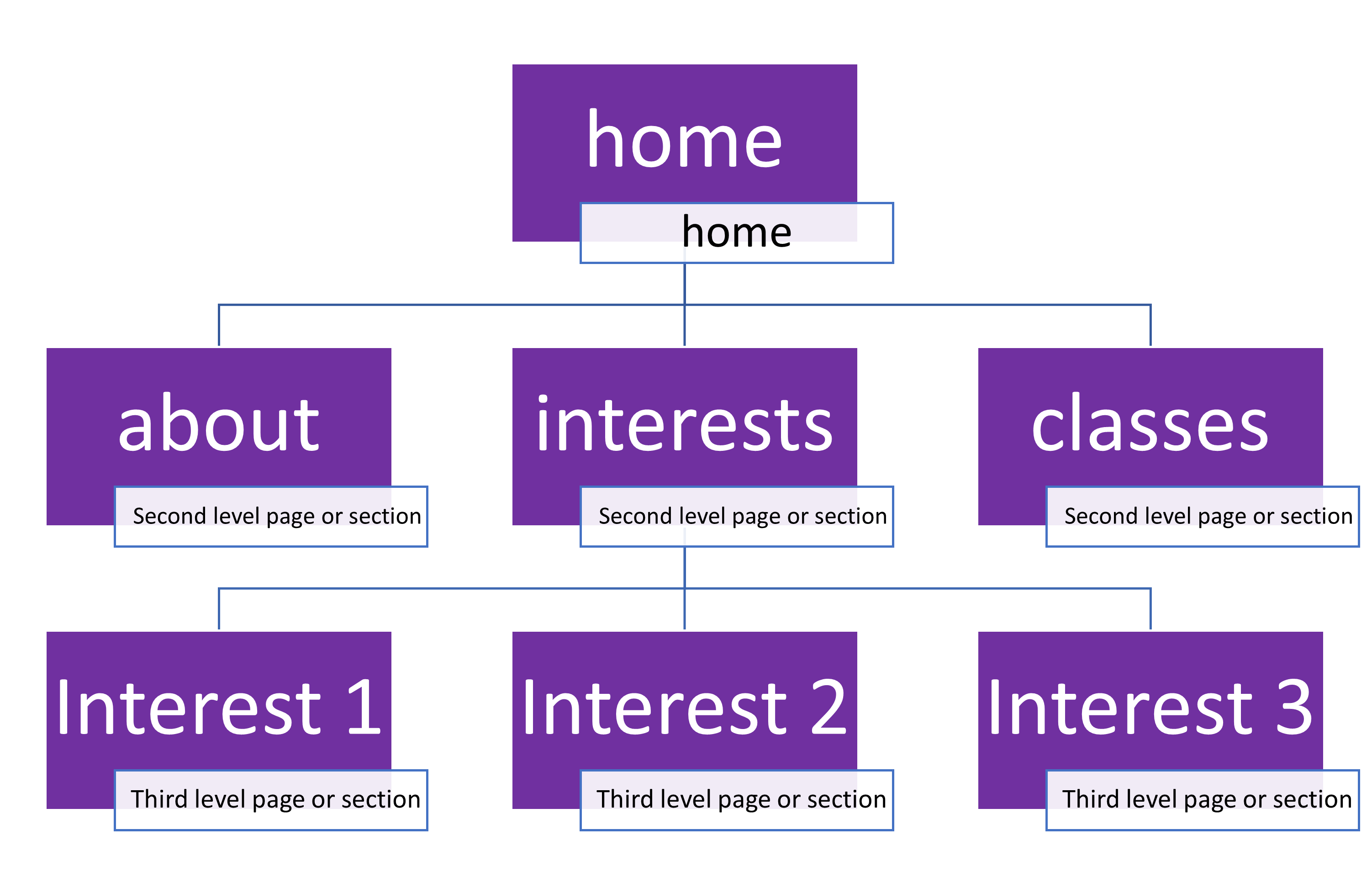
A sketch will help you keep the relationships clear
What kinds of text, images, or other objects are relevant to the topic of a particular page? Remember, some things add code weight to a page and are thus more slowly loading, but sometimes the object is critical to the message and the load will have to be borne
Within the structure of your web site, plan
to have every page link directly to the home page,
to its parent page,
to its children,
and to its siblings.
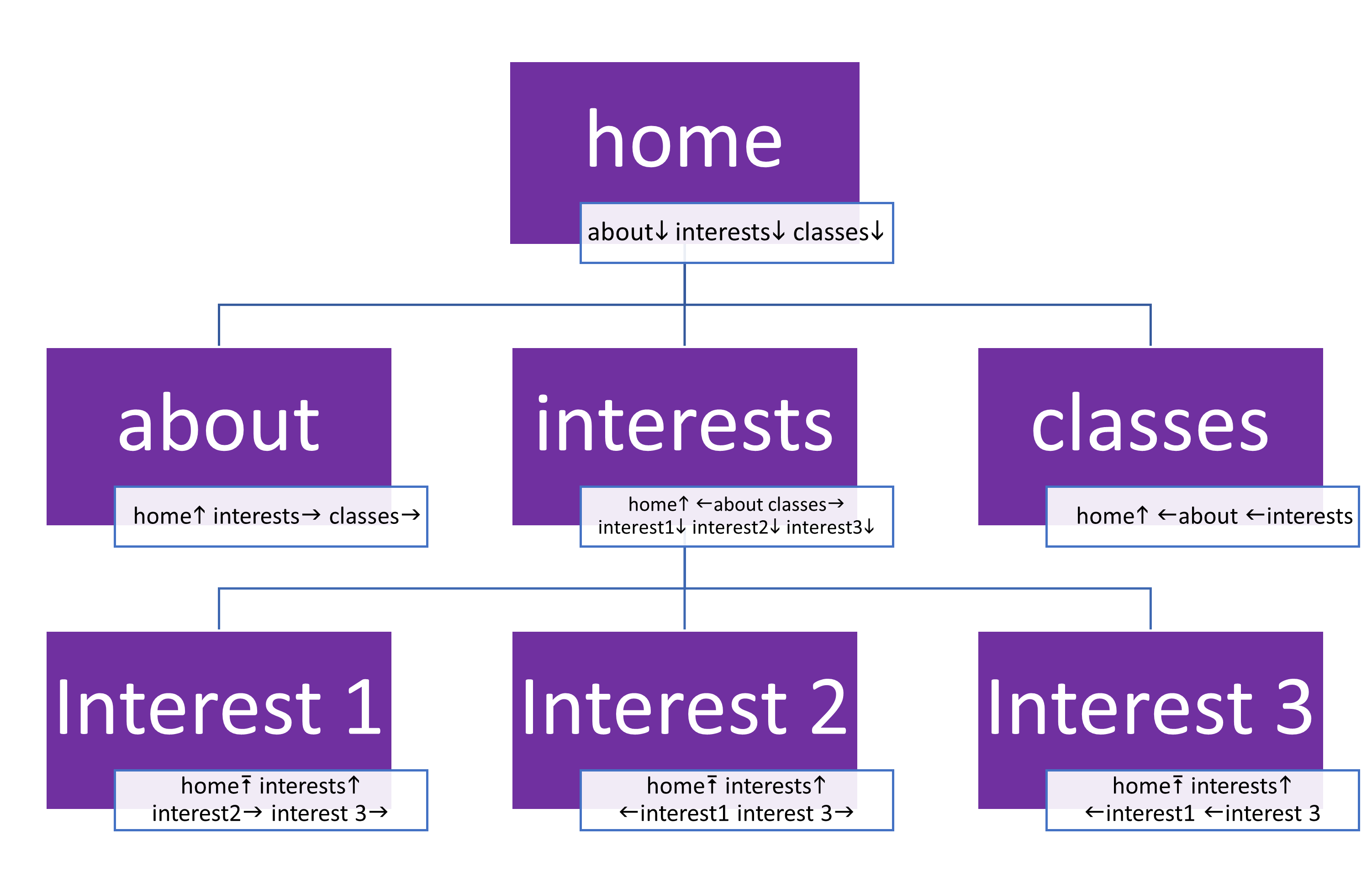
Ponder designing a way to place the navigation tools so that they are visually similar
and in the same relative position on each page
Don't forget that this are your pages, so they should represent you in a manner you wish to be represented
how do you plan to lay them out? what objects go where? appropriateness
user expectations: placement
user expectations: consistency
user expectations: usability
There are some consistent themes