|
|
|
Dr. Helen R. Tibbo |
|
Tibbo@ils.unc.edu |
|
http://www.ils.unc.edu/digitaldesktop |
|
|
|
|
|
|
“The end-user manages e-mail.” |
|
-ARMA Guideline for Managing E-mail |
|
|
|
|
|
|
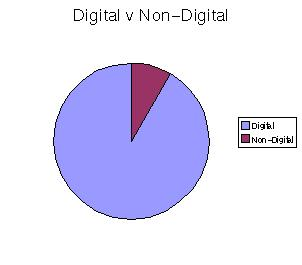
In 1999, 93% of information was produced in
digital format. |
|
|
|
|
Collaboration between myself and UNC Records
Management Program, starting in 1999. |
|
Records Management Program but no real work in
electronic records. |
|
Recognition that UNC employees might be
mishandling electronic records. |
|
|
|
|
|
|
Grant planning team consisted of: Helen Tibbo,
Tim Sanford, Tim Pyatt, Frank Holt, Mike Martin, Jeanne Smythe, &
Meredith Evans. |
|
Application submitted in May 2001. |
|
Original work plan called for collecting data at
UNC-CH and some of the other 15 UNC campuses. |
|
|
|
|
In October 2001, the UNC-CH Records Management
Program was dismantled due to the budget crisis. |
|
November 2001, NHPRC indicated they would fund
grant if UNC-CH maintained a records manager. |
|
Frank Holt’s position rescued and moved to the
Library, February 1, 2002. |
|
Duke University brought in to maintain cost
share. |
|
|
|
|
|
|
In March 2002, we were granted funding for the
first year. |
|
We should hear shortly about the next two years
but are very optimistic. |
|
|
|
|
|
|
|
|
|
Project has become much more interesting! Duke’s
addition has provided: |
|
Extensive and diverse expertise |
|
Records practice at a private institution to
compare with that from the 16-campus UNC System |
|
Digital information management behaviors at an
institution without any RM program and a highly decentralized structure |
|
An institution developing a campus records
management program as well as a digital archives initiative. |
|
|
|
|
“Tip” O’Neill: “All politics is local.” |
|
Desktop e-mail management and subsequent
archiving of material from the university environment presently depends on
the individual, his or her specific information management behaviors, and
the software being used. |
|
|
|
|
Most staff, faculty, and administrators,
especially the latter two groups, have little or no training in information
management. |
|
Electronic records are inherently fragile. If
they are not “preserved” early in their lives, they will not endure. |
|
|
|
|
|
|
Successful electronic information management
guidelines must take into account how people are presently managing their
digital information. |
|
|
|
|
Document how faculty, administrators, and staff
use and manage files and records from electronic mail and other desktop
applications at UNC-CH, Duke University, throughout the 16-campus UNC
system, and by extension, across academia. |
|
|
|
|
Based on the analysis of user needs and
practices, as well as the North Carolina Public Records Act, develop
optimized e-mail and desktop management policies and "best
practice" guidelines to serve both public and private higher education
in North Carolina and provide an adaptable model of practice for other
states. |
|
|
|
|
Develop educational opportunities (workshops,
handbook, exercises, web-based courses, etc.) to optimize faculty,
administrator, and staff use and management of desktop electronic
documents. |
|
|
|
|
Develop user profiles necessary for a strategic
consideration of electronic records management systems - this includes more
fully identifying and specifying business functions of faculty and
administrators heretofore termed "teaching, research, and service,"
and use these to evaluate the potential appropriateness of ERMSs for the
UNC-CH and Duke campuses. |
|
|
|
|
Disseminate information about the best practices
guidelines and instructional units at UNC, Duke, and across the 16-campus
UNC system via a statewide conference and to other universities via the
records management/ archival literatures and conferences and the project
website. |
|
|
|
|
Universities tend to be loosely tied federations
of schools and departments that each cherishes its own autonomy and vision. |
|
Faculty generally see themselves as independent
contractors, working for the university. |
|
Unfortunately, they may take the same approach
with documents. |
|
|
|
|
While institution-wide electronic records
management systems (ERMS) can improve desktop management, few universities
employ one. |
|
But deployment is only part of the battle: David
Wallace argues that “there are no magic bullets, only context-sensitive
desktop and system level implementations.” |
|
To do this, we need to know more about users. |
|
|
|
|
|
|
E-mail (as well as all other print &
electronic records) retention/disposition at the 16 campuses that make up
the UNC system is governed by the NC Public Records Law, NC General
Statutes, Chapter 132. |
|
|
|
|
To date, the only acceptable means to
“archiving” electronic records, and especially e-mail in NC, has been
printing out all records or microfilming them. |
|
|
|
|
Folks, it ain’t happening! |
|
About 1/3 of employees are printing out e-mail
and other electronic files frequently.
Are you??? |
|
Rick Barry reports that up to 80% of e-mail
creators state that they do not “have a clue” when e-mail messages
constituted official records. |
|
|
|
|
|
In our pilot survey, only 2 out of 55
respondents said they had a good deal of knowledge of the NC PRL. |
|
21 said they had no knowledge |
|
23 said they were not sure they had heard of the
law |
|
8 claimed some knowledge of the NCPRA |
|
|
|
|
|
|
Duke University does not function under the NC
Records Act. |
|
Duke, is however, open to lawsuits and
discovery. |
|
Different attitudes regarding ownership of
information, privacy, and security. |
|
|
|
|
The most likely answer for the development of
sound policies and subsequent compliance to state laws, and the effective and efficient
management of electronic mail in general, would appear to be user education
based on an understanding of user needs and behaviors within the context of
legal, fiscal, scholarly, and administrative requirements. |
|
|
|
|
|
Analyzing survey information. |
|
Developing interview scenarios and questions. |
|
Collecting data through strategic interviews on
campuses to document current records retention, organization, and
disposition practices. |
|
Analyzing filing schemes. |
|
Describing technical computing environments. |
|
|
|

 Notes
Notes