|
1
|
- Gary Marchionini
- University of North Carolina at Chapel Hill
- march@ils.unc.edu
- European Conference on Information Retrieval ’04
- Sunderland University
- April 5-7, 2004
|
|
2
|
|
|
3
|
- Content Features (queries too)
- Not only text
- Statistics, images, music, code, streams, biochemical
- Multimedia, multilingual
- Dynamic
- Temporal (e,g., blogs, wikis, sensor streams)
- Conditional (e.g., computed links, recommendations)
- Content Relationships
- Hyperlinks, new metadata, aggregations
- Digital Libraries, personal collections
- Content acquires history
|
|
4
|
- TREC tracks
- Link analysis
- Multiple sources of evidence (fusion)
- Authors’ words (e.g., full text IR)
- Indexer/abstractor words (e.g., OPACs)
- Authors’ citations/links (e.g., ISI, Google)
- Readers’ search paths (e.g., recommenders, opinion miners)
- Machine generated features and relationships
- Two key challenges:
- What new relationships can we leverage (human and machine)?
- How can we integrate multiple sources of evidence?
|
|
5
|
- Technical advances and technical literacy allows us to leverage
information seeker intelligence
- Rather than sole dependence on matching algorithms, focus on flow of
representations and actions in situ as people think with these new tools
and information resources
- Web has legitimized browsing as human-controlled information seeking
- To leverage human intelligence and effort, people must assume
responsibilities: beyond the two-word, single query
|
|
6
|
- Relevance feedback
- Query expansion
- User modeling/profiles, SDI services
- Recommender systems
- Explicit and implicit models
- Capture everything (e.g., Lifebits)
- User Interfaces
- Dynamic queries
- Agile views
|
|
7
|
|
|
8
|
|
|
9
|
|
|
10
|
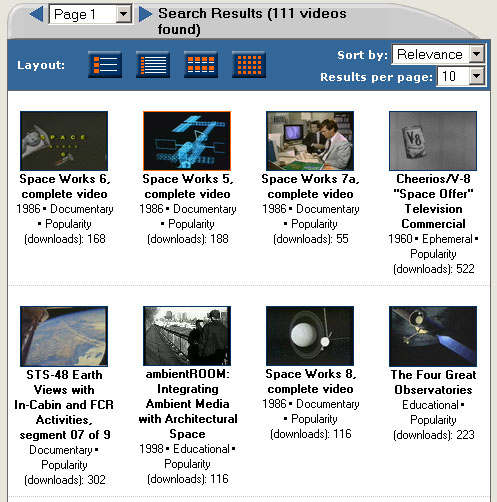
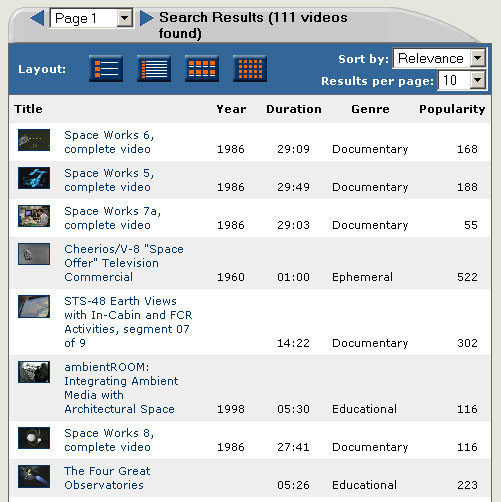
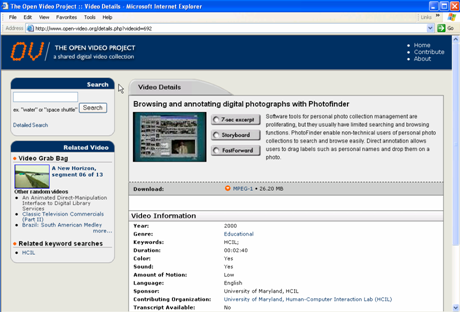
- Open access digital library of digital video for education and research
- 2000+ video segments: MPEG1, MPEG-2, MPEG-4, QuickTime
- Agile Views Design Framework
- Different types of views
- Overviews, previews, shared views
- Multiple examples of views
- Dynamic control mechanisms
|
|
11
|
|
|
12
|
|
|
13
|
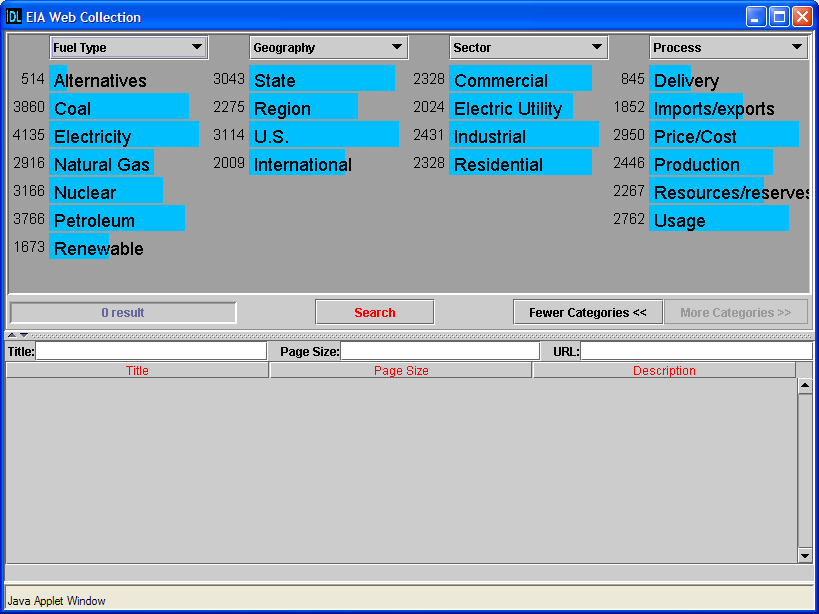
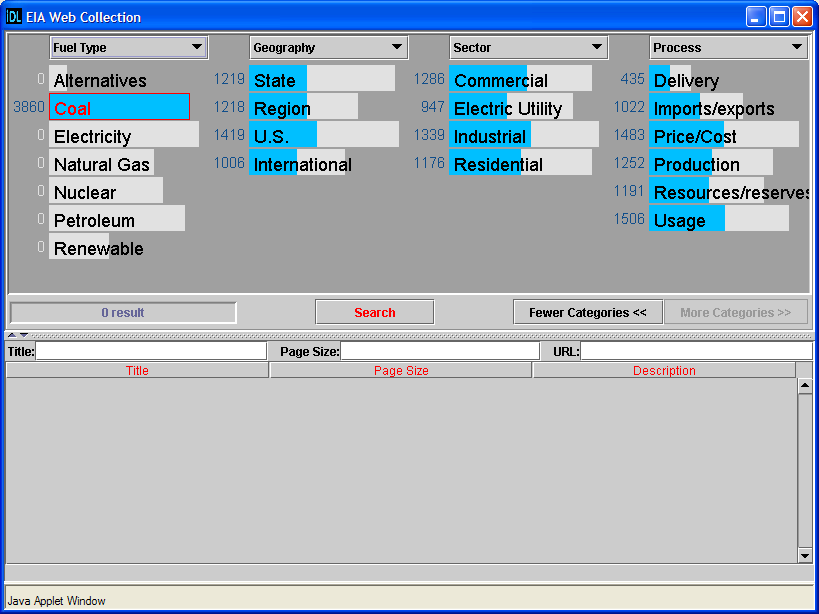
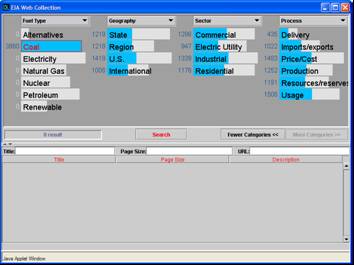
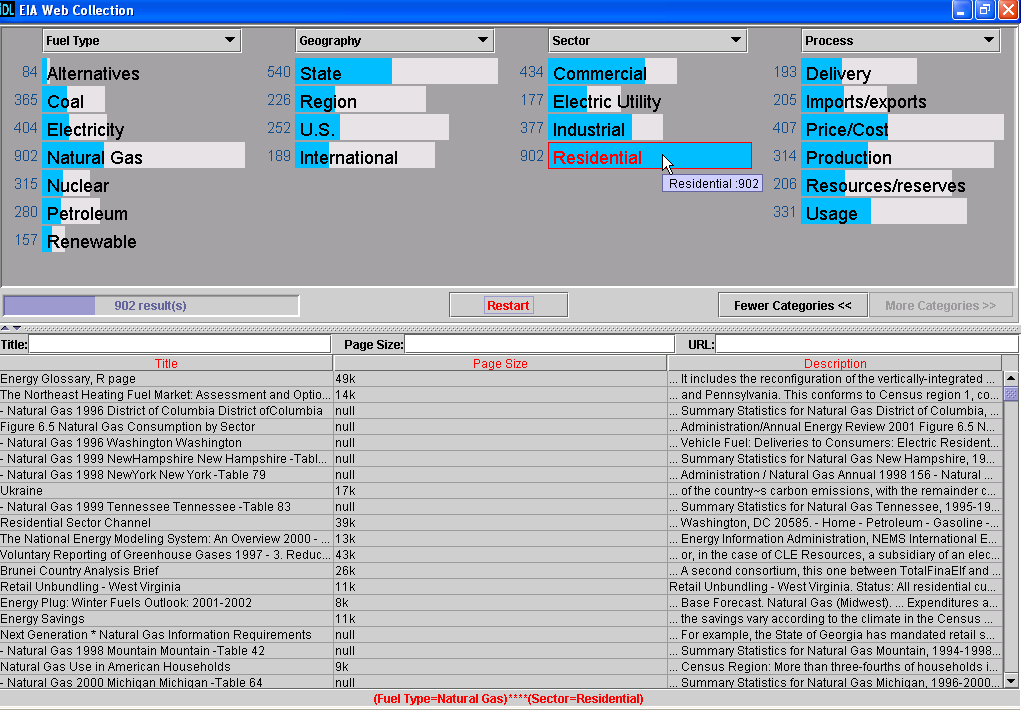
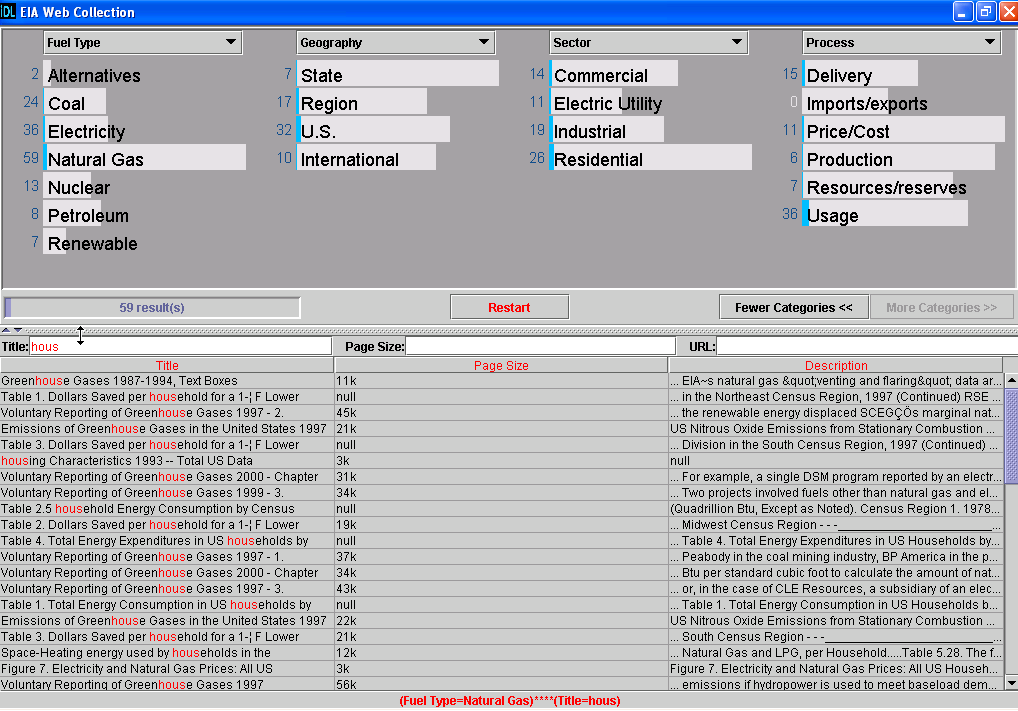
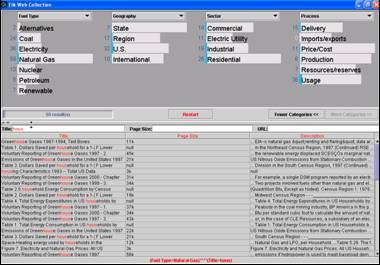
- A general purpose dynamic query interface for databases with a small
number of facets (~10) and a small number of categories in each facet
(~10).
- Easy to look ahead (overviews and previews)
- Latest version combines interactive partitioning with string query
|
|
14
|
|
|
15
|
|
|
16
|
|
|
17
|
|
|
18
|
- Principles
- Look ahead without penalty
- Minimize scrolling and clicking
- Alternative ways to slice and dice
- Minimize delays
- Caveats
- Scalability (getting metadata to client side)
- Metadata crucial
- We are working on automatically creating partitions
|
|
19
|
- Improved I/O and control mechanisms
- Information need articulation (e.g., paste, voice, gesture)
- Mobile displays (AR glasses, projected)
- Context management
- The world (time, space, other people)
- The information seeker (history, privacy)
- Information resources (ubiquitous)
- Evaluation methods and metrics
|
|
20
|
|
|
21
|
|

 Notes
Notes